The 'Berlin patient' is an HIV-positive man who developed acute myeloid leukaemia, received successful treatment and subsequently experienced a relapse in 2007 that required a transplant of stem cells.
 "Our results strongly suggest that cure of HIV has been achieved in this patient," said the study in the peer-reviewed journal Blood, a publication of the American Society of Hematology.
Before the stem cell transplant the patient received chemotherapy treatment that destroyed most immune cells and total body irradiation, and also received immunosuppressive drugs to prevent rejection of the stem cells.
Antiretroviral therapy was halted on the day of the transplant, and the patient had to receive a second stem cell transplant 13 days after the first one, due to a further relapse of leukaemia.
The patient continued to receive immunosuppressive treatment to prevent rejection for 38 months, and at 5, 24 and 29 months post-transplant colon biopsies were taken to investigate possible graft-versus-host disease in the intestine. At each investigation additional samples were taken to check for signs of HIV infection in the abundant immune cells of the gut wall.
 One of the challenges for any approach to curing HIV infection is long-lived immune system cells, which need to be cleared before a patient can be cured. In the case of the Berlin patient CCR5-bearing macrophages could not be detected after 38 months, suggesting that chemotherapy had destroyed these longer-lived cells, and that they had also been replaced by donor cells.
Nevertheless HIV remained undetectable by both viral load testing (RNA) and tests for viral DNA within cells, and HIV antibody levels declined to the point that the patient has no antibody reactivity to HIV core antibodies, and only very low levels of antibodies to the HIV envelope proteins.
 Seventeen months after the transplant the patient developed a neurological condition, which required a brain biopsy and lumbar puncture to sample the cerebrospinal fluid for diagnostic purposes. HIV was also undetectable in the brain and the CSF.
An additional indication that HIV is not present lies in the fact that the patient’s CD4 cells are vulnerable to infection with virus that targets the CXCR4 receptor. If any virus with this preference was still present, the researchers argue, it would be able to swiftly infect the large population of memory CD4 cells that has emerged.
- While the highly lethal technique used on the man known as the "Berlin Patient" would not work for most of the 33 million people with HIV worldwide, scientists say the research shows important progress toward a universal cure.
 "Our results strongly suggest that cure of HIV has been achieved in this patient," said the study in the peer-reviewed journal Blood, a publication of the American Society of Hematology.
Before the stem cell transplant the patient received chemotherapy treatment that destroyed most immune cells and total body irradiation, and also received immunosuppressive drugs to prevent rejection of the stem cells.
Antiretroviral therapy was halted on the day of the transplant, and the patient had to receive a second stem cell transplant 13 days after the first one, due to a further relapse of leukaemia.
The patient continued to receive immunosuppressive treatment to prevent rejection for 38 months, and at 5, 24 and 29 months post-transplant colon biopsies were taken to investigate possible graft-versus-host disease in the intestine. At each investigation additional samples were taken to check for signs of HIV infection in the abundant immune cells of the gut wall.
 One of the challenges for any approach to curing HIV infection is long-lived immune system cells, which need to be cleared before a patient can be cured. In the case of the Berlin patient CCR5-bearing macrophages could not be detected after 38 months, suggesting that chemotherapy had destroyed these longer-lived cells, and that they had also been replaced by donor cells.
The German researchers and San Francisco-based immunologist Professor Jay Levy believe that the findings point to the importance of suppressing the production of CCR5-bearing cells, either through transplants or gene therapy.The patient did not resume antiretroviral therapy after the transplant.
Nevertheless HIV remained undetectable by both viral load testing (RNA) and tests for viral DNA within cells, and HIV antibody levels declined to the point that the patient has no antibody reactivity to HIV core antibodies, and only very low levels of antibodies to the HIV envelope proteins.
 Seventeen months after the transplant the patient developed a neurological condition, which required a brain biopsy and lumbar puncture to sample the cerebrospinal fluid for diagnostic purposes. HIV was also undetectable in the brain and the CSF.
 An additional indication that HIV is not present lies in the fact that the patient’s CD4 cells are vulnerable to infection with virus that targets the CXCR4 receptor. If any virus with this preference was still present, the researchers argue, it would be able to swiftly infect the large population of memory CD4 cells that has emerged.
The `Berlin patient`, Timothy Ray Brown, a US citizen who lives in Berlin, was interviewed this week by German news magazine Stern.
His course of treatment for leukaemia was gruelling and lengthy. Brown suffered two relapses and underwent two stem cell transplants, as well as a serious neurological disorder that flared up when he seemed to be on the road to recovery.
The neurological problem led to temporary blindness and memory problems. Brown is still undergoing physiotherapy to help restore his coordination and gait, as well as speech therapy.
Friends have noticed a personality change too: he is much more blunt, possibly a disinhibition that is related to the neurological problems.
On being asked if it would have been better to live with HIV than to have beaten it in this way he says “Perhaps. Perhaps it would have been better, but I don’t ask those sorts of questions anymore.”

 Timothy Brown is now considering a move from Berlin to Barcelona or San Francisco, and, reports Stern magazine, enjoying a drink and a cigarette.
Stern also interviewed Dr Gero Hütter, who was in charge of Timothy Brown’s treatment. Dr Hütter told Stern that as a scientist he was “in the right place, at the right time” and that “for me it is important to have overthrown the dogma that HIV can never be cured. Something like this is the greatest thing one can achieve in medical research”.
His course of treatment for leukaemia was gruelling and lengthy. Brown suffered two relapses and underwent two stem cell transplants, as well as a serious neurological disorder that flared up when he seemed to be on the road to recovery.
 | |
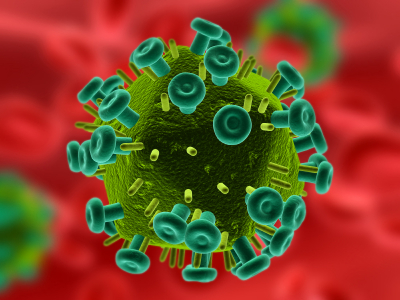
| HIV virus on microscope |
Friends have noticed a personality change too: he is much more blunt, possibly a disinhibition that is related to the neurological problems.
On being asked if it would have been better to live with HIV than to have beaten it in this way he says “Perhaps. Perhaps it would have been better, but I don’t ask those sorts of questions anymore.”

 Timothy Brown is now considering a move from Berlin to Barcelona or San Francisco, and, reports Stern magazine, enjoying a drink and a cigarette.
Stern also interviewed Dr Gero Hütter, who was in charge of Timothy Brown’s treatment. Dr Hütter told Stern that as a scientist he was “in the right place, at the right time” and that “for me it is important to have overthrown the dogma that HIV can never be cured. Something like this is the greatest thing one can achieve in medical research”.
http://aidsmap.com/page/1577949/http://bloodjournal.hematologylibrary.org/cgi/content/short/blood-2010-09-309591v1
http://www.nytimes.com/1998/06/21/magazine/the-berlin-patient.html
http://www.webmd.com/hiv-aids/news/20101215/hiv-aids-cure-faq


